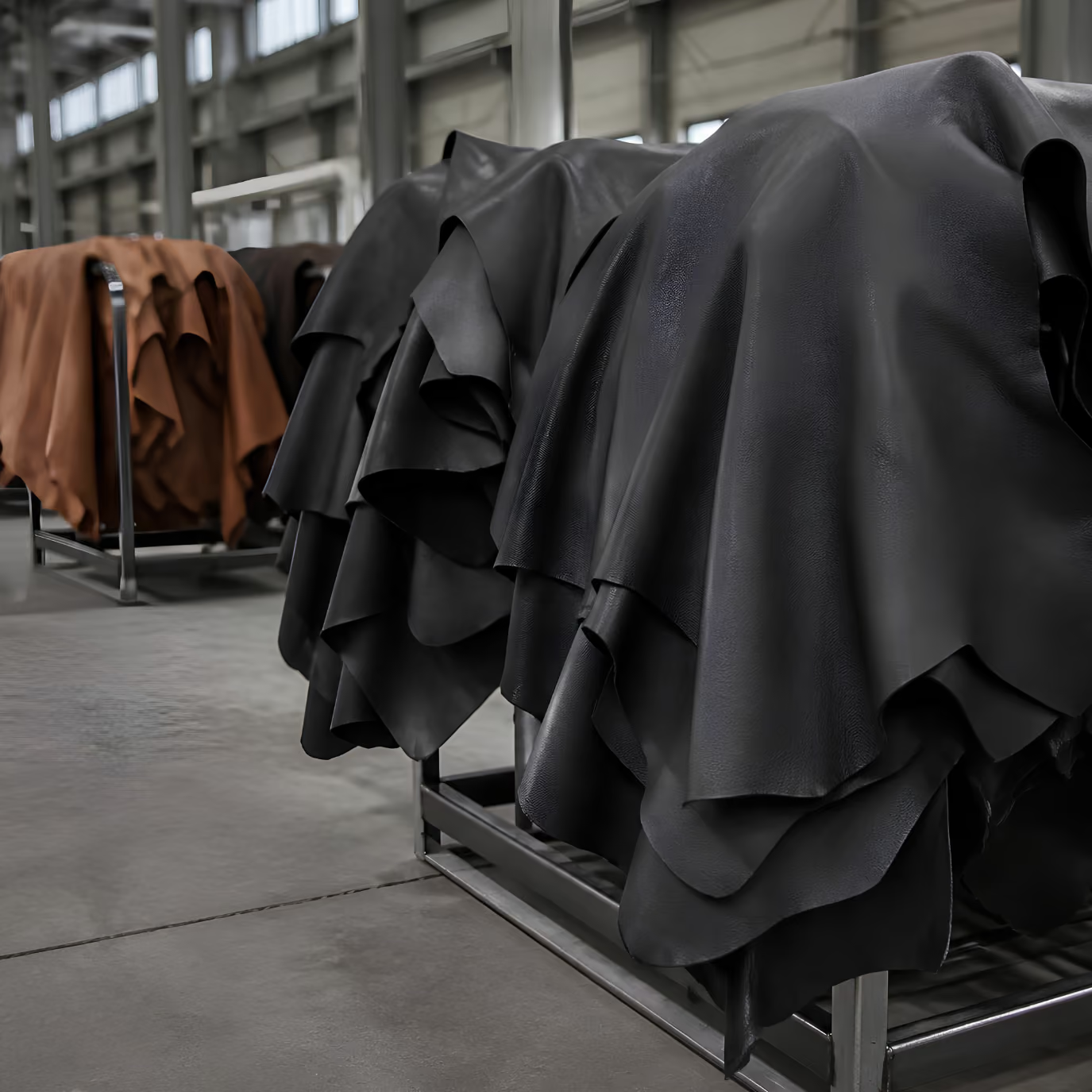
Black and brown tanned hides on racks in a tannery
tanning

Flawless leather finishing: clean compressed air for consistent color yield

Tanning and Leather Finishing

In a tannery, finishing is the stage that decides the value of the hide: pigments, aniline dyes, top coats and waxes are spray-applied on automatic rotary spraying lines or with air-mix guns. A defect at this stage — a patch, a different shade, a fish-eye — downgrades the hide or forces a rework cycle. The cause is almost always the same: the compressed air feeding the guns.

Untreated air changes how the finishing product performs over the day: humidity and temperature alter the pigment's viscosity at the moment of spraying, and leather — a natural, hygroscopic material — doesn't forgive variation. The result is color inconsistency between hides from the same batch, the costliest problem in a tannery: batches rejected or reworked because they don't match the reference sample. With the Evans system the air reaches the guns filtered, heated and deionized, guaranteeing the same yield every time, regardless of when and where you spray.

Deionization also removes the electrostatic charge generated by processing (buffing, handling), which would otherwise draw dust onto the hide right at the moment of application. Every pass comes out even, with no inclusions, and with the same gloss and feel across the whole batch.

Why treat compressed air

The risks of untreated air in leather finishing

01
Static charge and embedded dust

Leather processing (buffing, staking, handling) generates fine dust carrying electrostatic charge. Air that isn't deionized doesn't discharge it: dust sticks to the surface right while the pigment is being sprayed.

02
Oil and poor top coat adhesion

Traces of oil in the air line settle on the hide before the finishing coat. The top coat doesn't bond evenly: halos, dull patches, compromised adhesion on the finished product.

03
Moisture and color yield

Moisture in the air alters the pigment's viscosity at the moment of spraying: the same formula gives a different color from one hide to the next. The result is a batch outside color tolerance, to be reworked or downgraded.

The Evans system advantage

Perfect air for every finishing line

Consistent color yield

Air with stable viscosity and humidity: same color, same opacity, from the first to the last hide of the batch.

Top coat without halos

With no oil in the line, the finishing coat bonds evenly across the whole surface.

Zero embedded dust

Deionization removes electrostatic charge: no particulate drawn onto the hide during spraying.

Fewer batches to rework

Less color variation between hides means less scrap and fewer passes to bring batches back to sample.

Consistent results all year round

The same air quality all year round, from the first gun to the last on the rotary line.

Less downtime

Scheduled maintenance, no sudden stoppages from condensation in the lines or guns.
Custom solutions

Every tannery is different. Evans adapts.

From the sampling lab to the industrial finishing line, Evans sizes the air treatment to the number of guns and their average consumption, so the applied product (pigment, aniline, top coat) performs at its best.

Site survey, sizing, installation and testing included.

Request information →

Sampling lab

Color development and trials on small batches. Compact installation on the existing compressed air line.

Finishing line

Series spraying on a rotary line or with manual guns. Modular system calibrated to the number of stations.

Industrial finishing

High-volume production, several spraying lines in parallel. Centralized air quality monitoring.

Automatic spray nozzles finishing leather hides on a conveyor
Industry 5.0

Certified Industry 5.0 systems

The Evans system can be interconnected with the finishing line: real-time monitoring of pressure, temperature and dew point, automatic alerts, and data for the Industry 5.0 tax credit.

FAQ

Frequently asked questions about leather finishing

Why is compressed air so important in leather finishing?

Compressed air is the carrier that atomizes pigments, aniline and top coats as they leave the guns. If it contains moisture, oil or particulate, those contaminants alter how the product performs on the hide: color variation, fish-eye, halos on the top coat. In a tannery, a finishing defect often means downgrading the whole hide or the whole batch.

How does compressed air affect color yield?

Moisture in the air alters the pigment's viscosity at the moment of spraying: the same formula gives a different shade from hide to hide. With air at constant humidity, color yield stays the same from the first to the last hide of the batch, reducing scrap from failing to match the sample.

Is the Evans system compatible with automatic rotary spraying lines?

Yes. Evans sizes its machines to the number of guns and the total compressed air flow required, guaranteeing the same air quality at every nozzle, from the first to the last on the rotary line.

Can I install the Evans system on the compressed air line I already have in my tannery?

Yes. Evans installs close to the finishing equipment without changing the main network. Sizing takes into account the number of guns and the type of product applied — pigmented, aniline or top coat.

How long does installation take without stopping production?

For a sampling lab or a compact finishing line, installation and testing take one working day at most. On industrial multi-gun lines, Evans plans the work to minimize production downtime.

Does Evans air help reduce scrap from fish-eye or top coat halos?

Yes. Removing oil and moisture from the air line eliminates the two most common causes of fish-eye and top coat halos. Fewer hides to rework or downgrade means more value recovered from every batch.