
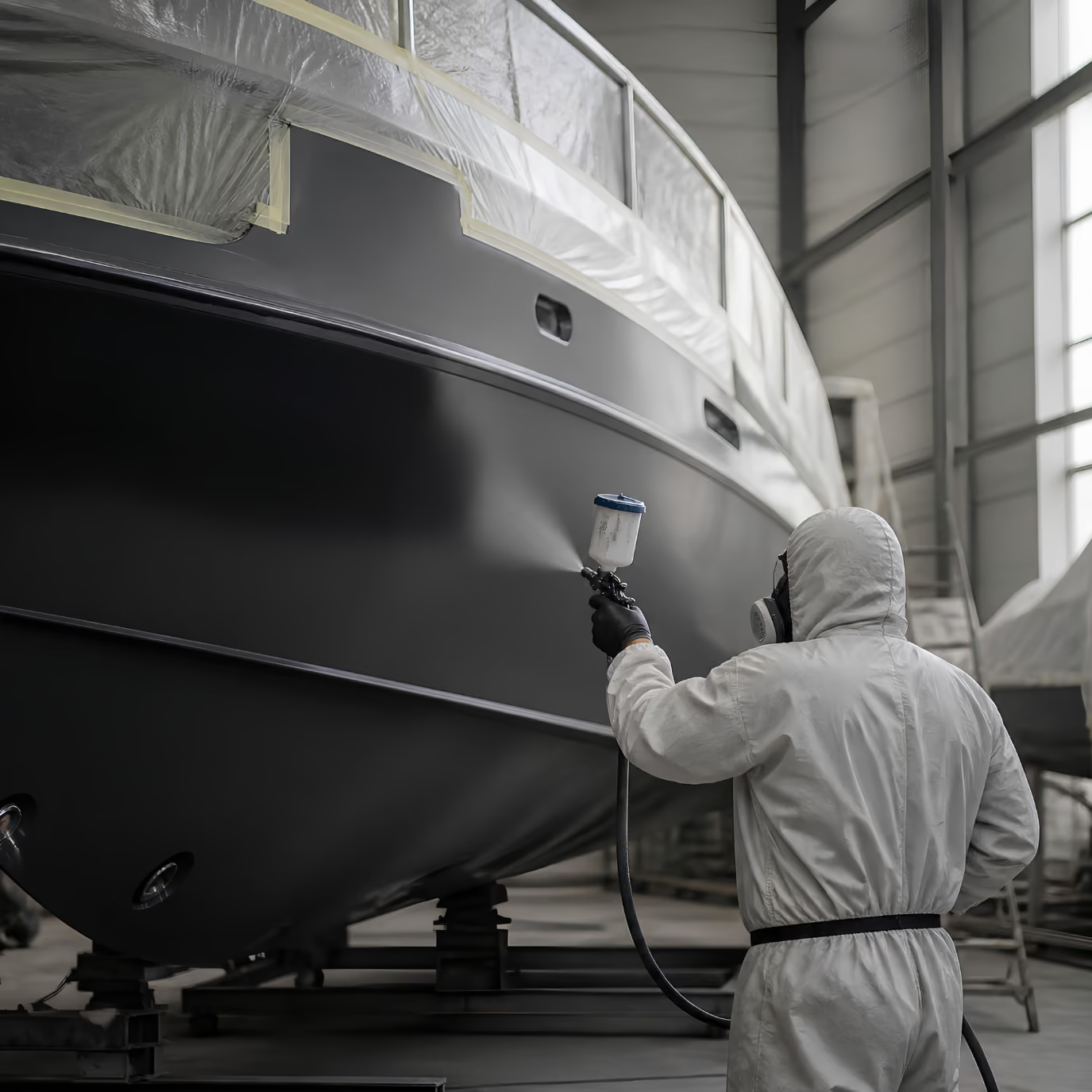
WHY TREAT COMPRESSED AIR
Coastal air keeps relative humidity between 70–90%. Condensation in the compressed air line creates micro-porosity in the gelcoat: the entry points for osmosis.
Traces of oil prevent the antifouling from adhering. The result is an underwater coating that peels off mid-season: early haul-out, bottom to redo, weeks of yard time lost, an unhappy customer.
Painting a hull of 8–15 m and up requires steady, consistent air delivery. A drop halfway through a pass leaves a visible joint line: sanding, a blending coat, a final coat. Three extra days.
THE EVANS SYSTEM ADVANTAGE
From a small boat shed to an industrial shipyard, Evans sizes the air treatment system based on the required flow rate and the environmental conditions of the yard.
Site survey, sizing, installation and testing included.
Request information →Boat storage and private refitting. Compact installation on your existing compressor.
Professional production and refitting. Modular system for multiple painting stations.
Heavy shipbuilding and superyachts. Centralized system with remote monitoring.

Your Evans system can be interconnected with the production line: real-time monitoring of pressure, temperature and humidity, automatic alerts, and data for the Industry 5.0 tax credit.
FAQ
In a boatyard, humidity exceeds 70% all year round and the damage is structural: micro-porosity in the gelcoat that triggers osmosis. The materials (epoxies, antifouling, 2K polyurethanes) are far more expensive: one mistake on the bottom costs days of yard time.
Osmosis starts when water penetrates the laminate through micro-porosity in the gelcoat. This micro-porosity forms during application when the compressed air contains condensation: micro-droplets trapped beneath the protective layer. An Evans system removes condensation upstream, ensuring a compact, watertight gelcoat from the very first cycle.
Yes. Evans systems are compatible with all major marine coating cycles: epoxy primer, self-polishing and biocide antifouling, and 2K polyurethane topside enamels. Treated air improves primer adhesion and ensures the antifouling bonds properly to the layer beneath.
Yes. The Evans system connects to the existing air network without replacing the compressor. Site survey, sizing and installation are included: the yard keeps running.
For most boatyards, installation takes 1–2 working days at most, and in some cases just a few hours. The system connects to the existing air line without structural work. Painting can resume the same day.
Yes. 2K paints such as Awlgrip, Toplac and Jotun Hardtop require stable pressure and clean air for proper atomization. The Evans system ensures optimal conditions for every finish, from deck to interiors. Constant pressure eliminates the fluctuations that cause color differences between adjacent passes.


