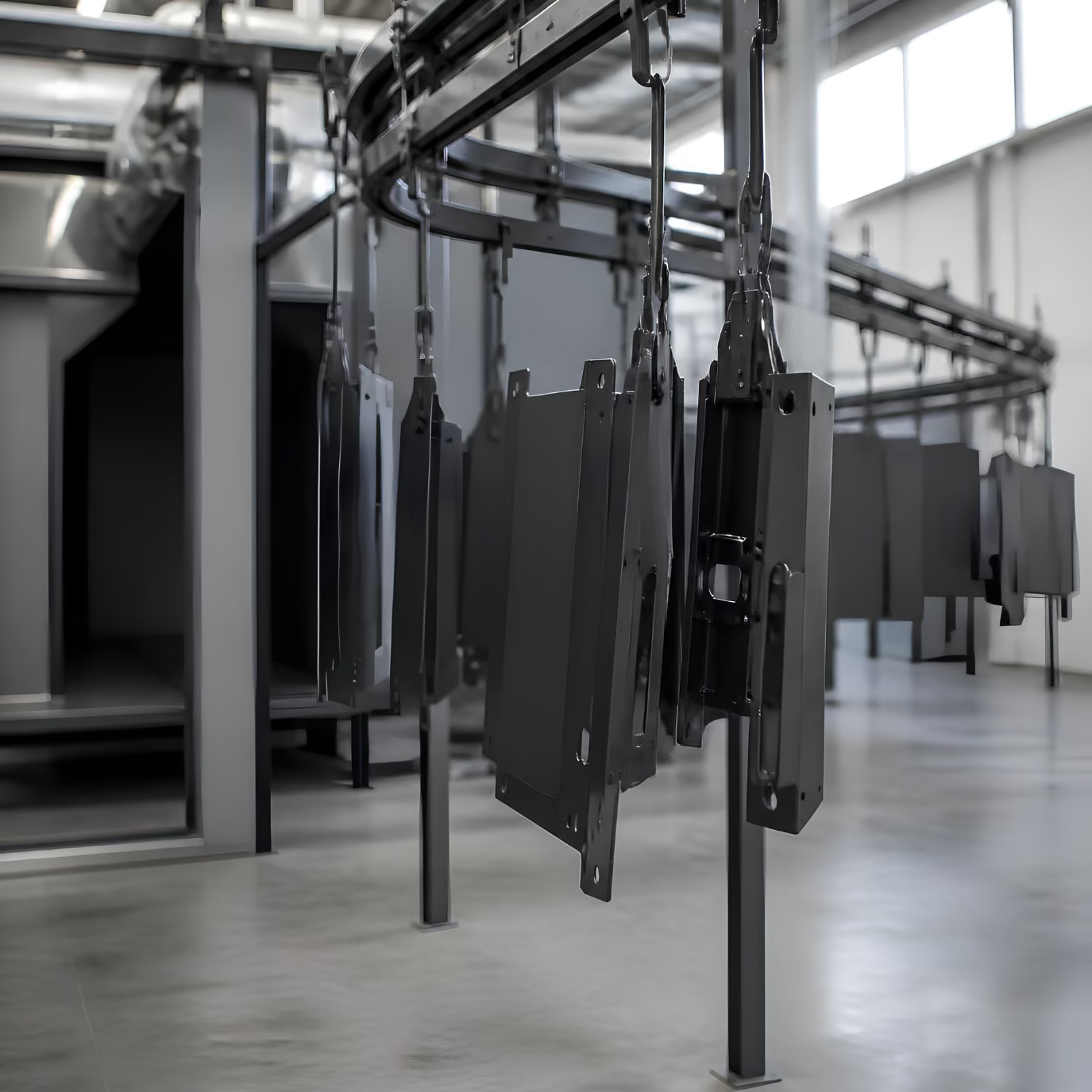
Metal parts hanging on the overhead conveyor of an electrostatic powder coating line
electrostatic coating

Flawless electrostatic coating: why clean compressed air matters for keeping a constant charge

Electrostatic Coating

In electrostatic powder coating, compressed air isn't only the carrier that brings the product to the gun: it also helps the powder atomize properly, so that it reaches the surface of the part. In triboelectric guns the charge is generated by the powder rubbing against the walls of the gun barrel, driven by the air flow itself. Corona guns have an electrode that ionizes the surrounding air, creating a strong electric field (the corona effect).

In electrostatic liquid coating, compressed air is used to atomize the liquids.

In both cases, air of inconsistent quality doesn't only affect atomization, but also the electrostatic charge with which the product reaches the part.

Moisture and mixed charges in compressed air are the silent enemy of this process: air that is too humid and “charged” disperses the electrostatic charge on its way to the part, reducing transfer efficiency and powder adhesion. With the Evans system the air reaches the guns filtered, heated and deionized, keeping the same charging efficiency from the first to the last coated part.

Moisture and charges in the air lines also cause another problem, typical especially of powder coating: product clumping in the feed hoses and in the fluidizing hopper. The powder absorbs moisture, clumps, clogs the nozzles and produces an uneven flow. Dried, “discharged” air removes this variable, guaranteeing steady fluidizing and conveying to manual or robotic guns.

Why treat compressed air

Problems caused by untreated air in electrostatic coating

01
Moisture and charge dispersion

Air that is too humid disperses the electrostatic charge before it reaches the part: less powder is deposited, adhesion drops and transfer efficiency collapses. The result is more wasted product and a less uniform finish.

02
Oil and powder contamination

Traces of oil in the air line contaminate the powder in the hopper or in the feed hoses. The coating film shows craters, halos or areas of poor adhesion, often visible only after curing in the oven.

03
Moisture and powder clumping

The powder absorbs moisture from the fluidizing and conveying air: it clumps, clogs nozzles and hoses, and produces an uneven flow at the gun. The result is an irregular film thickness from one gun to the next.

The Evans system advantage

Perfect air for every electrostatic system

Consistent transfer efficiency

Dry air keeps the same charging efficiency from the first to the last part of the shift, on both tribo and corona guns.

Less powder clumping

Moisture-free fluidizing and conveying air: no lumps, no clogged nozzles, a constant flow.

Less overspray, less waste

A stable electrostatic charge improves wrap-around on the part: less product dispersed, less reclaim to handle.

Crater-free finish

Clean air eliminates oil contamination of the powder at the source: zero craters, zero halos on the coating film.

Consistent results all year round

The same air quality in July and in January, on the first gun and on the last one in the line.

Less downtime

Scheduled maintenance, no sudden stoppages from condensation in the circuits or guns.
Custom solutions

Every electrostatic line is different. Evans adapts.

From the manual gun to the multi-station robotic line, Evans sizes the air treatment to the number of guns, the charging type — tribo or corona — and the flow required for fluidizing and conveying.

Site survey, sizing, installation and testing included.

Request information →

Manual booth

One or two guns, small-scale or contract coating. Compact installation on the existing compressor.

Semi-automatic powder line

Several fixed or reciprocating guns. Modular system calibrated to the fluidizing and conveying flow.

Multi-station robotic system

High-volume production, several robots or guns in parallel. Centralized air quality monitoring.
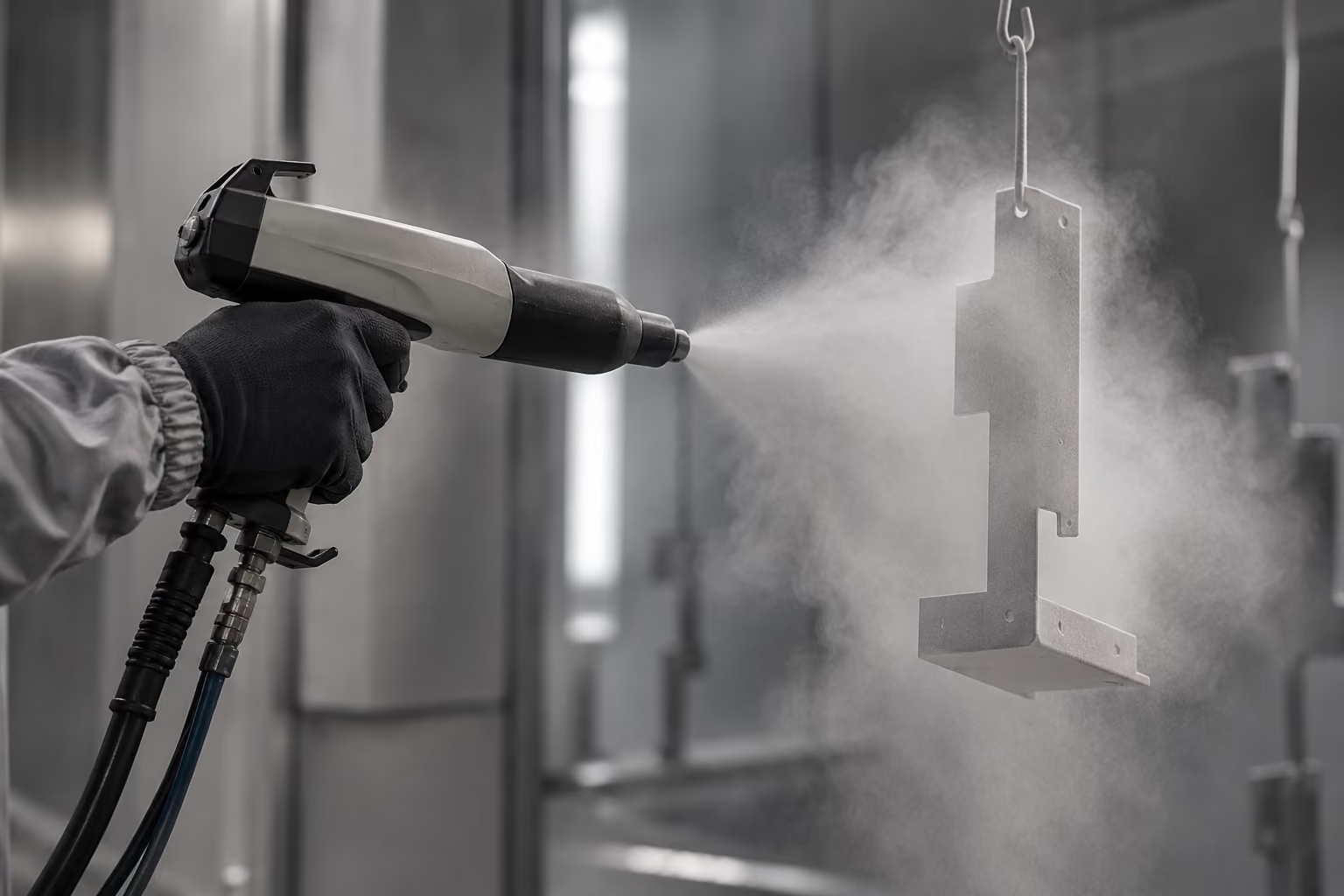
Spray gun atomizing the product with Evans-treated compressed air
Industry 5.0

Certified Industry 5.0 systems

The Evans system can be interconnected with the coating line: real-time monitoring of pressure, temperature and dew point, automatic alerts, and data for the Industry 5.0 tax credit.

FAQ

Frequently asked questions about electrostatic coating

Why is compressed air so important in electrostatic coating?

In triboelectric or corona guns, compressed air is also used to convey and atomize the powder. In liquid guns, air is used to atomize the product. If the air is humid or carries static charges, the application suffers directly, just as in conventional spray painting.

How does humidity affect transfer efficiency?

Air that is too humid disperses the electrostatic charge on its way to the part, reducing transfer efficiency and powder adhesion. With air at constant humidity, charging performance stays the same from the first to the last gun on the line.

Does the Evans system prevent powder clumping in hoses and nozzles?

Yes. Clumping occurs when the powder absorbs moisture from the fluidizing and conveying air. Dried air removes this variable, guaranteeing a constant powder flow from the hopper to the gun.

Is Evans compatible with both triboelectric and corona guns for powder coating?

Yes. The system treats the air upstream of any type of electrostatic gun — tribo or corona — sizing the treatment to the flow required for fluidizing, conveying and atomizing.

Can I install the Evans system on my existing line?

Yes. Evans installs downstream of the existing compressor without changing the main network. Sizing takes into account the number of guns and the charging type used.

How long does installation take without stopping production?

For a manual booth or a compact powder line, installation and testing typically take one working day. On multi-station robotic systems, Evans plans the work to minimize production downtime.