
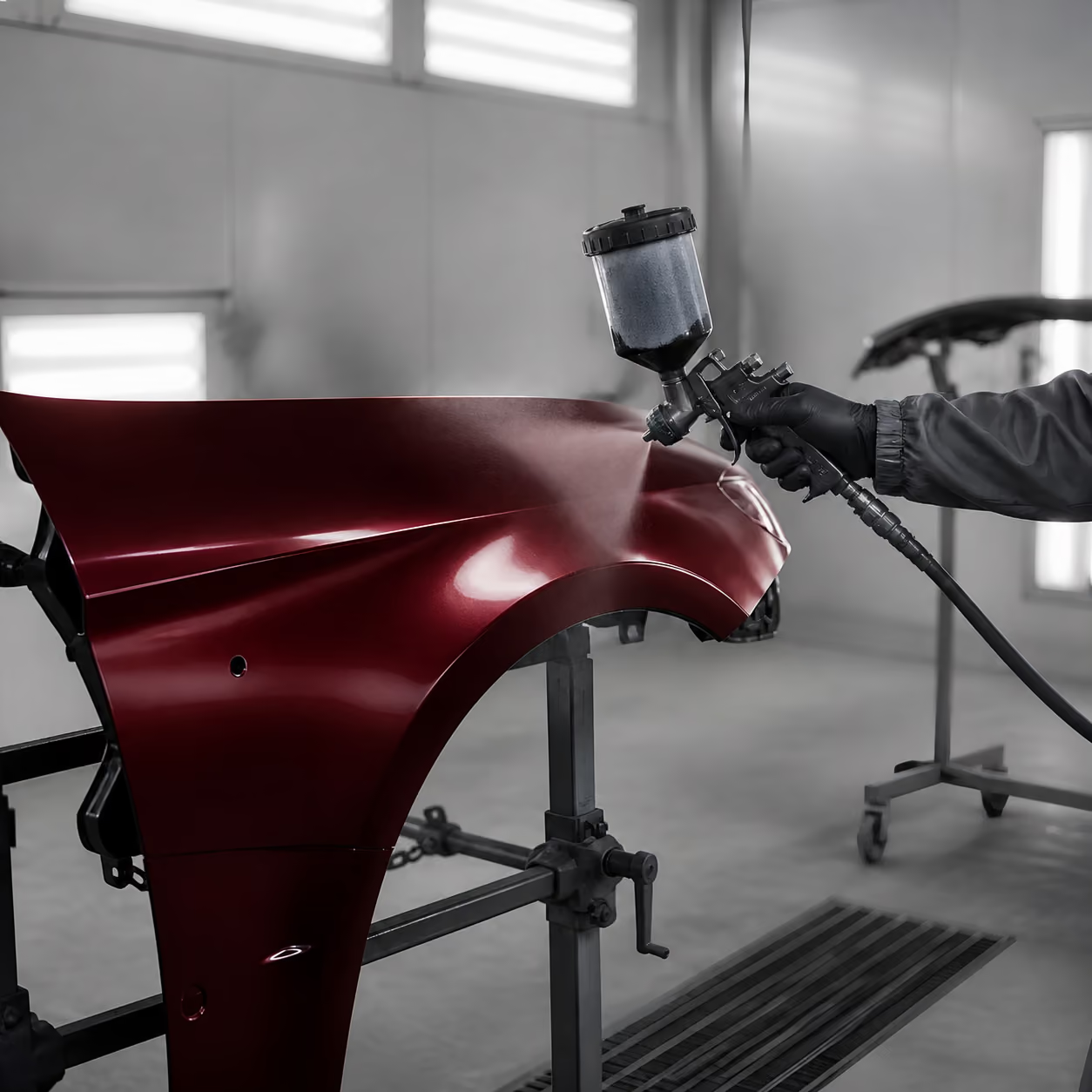
WHY TREAT COMPRESSED AIR
Residual moisture in the air line causes fish-eye, orange peel and rejection of waterborne paints. One bad cycle costs hours of rework.
A poorly filtered compressor injects oil traces into the paint: stains, poor primer adhesion, and the warranty on the finished job at risk.
Pressure drops during spraying change the spray pattern. The result is an uneven pass, visible under raking light.
THE EVANS SYSTEM ADVANTAGE
From the standard configuration for a small body shop to a multi-booth system for industrial production, Evans sizes the air treatment system based on the flow rate required, the type of painting, and local regulations.
Site survey, sizing, installation and testing included.
Request information →Standard configurations: filters, dryers, separators. Plug & play, ready in less than a day.
Semi-custom system: flow rate and filtration stage calibrated to your booths and number of guns.
Multi-booth solution with centralized monitoring, Industry 5.0 integration and scheduled maintenance.

Your Evans system can be interconnected with the production line: real-time monitoring of pressure, temperature and humidity, automatic alerts, and data for the Industry 5.0 tax credit.
FAQ
Compressed air powers spray guns, atomizers and the booth’s air handling system. If it contains moisture, oil or particulate, those contaminants end up directly in the paint film. The result: fish-eye, orange peel, poor adhesion. Proper upstream treatment is the only way to eliminate the cause at its source.
Body shops that have installed an Evans system report paint consumption reductions of at least 15% and a 20–30% reduction in rework, plus longer-lasting booth filters. The investment typically pays for itself in 12–18 months.
SOL and EVA systems are designed and built in compliance with the main European directives for industrial machinery safety: Machinery Directive 2006/42/EC, Electromagnetic Compatibility Directive 2014/30/EU, Low Voltage Directive 2014/35/EU. The systems also comply with the harmonized standards EN ISO 12100, EN 60204-1 and EN ISO 13857, 13850 and 14120 on safety and risk assessment.
Yes. Evans designs every system starting from an analysis of the existing air line. In most cases the system integrates without demolition or structural changes.
Standard installation takes 2 to 6 hours, often carried out over the weekend or during lunch breaks to avoid production downtime. Evans plans the site visit, delivery and testing to minimize the impact on your body shop’s operations.
Yes — and for waterborne paints in particular, air drying becomes even more critical. Waterborne paints are sensitive to residual moisture: Evans guarantees a consistently low dew point for regular drying times and uniform results.


