
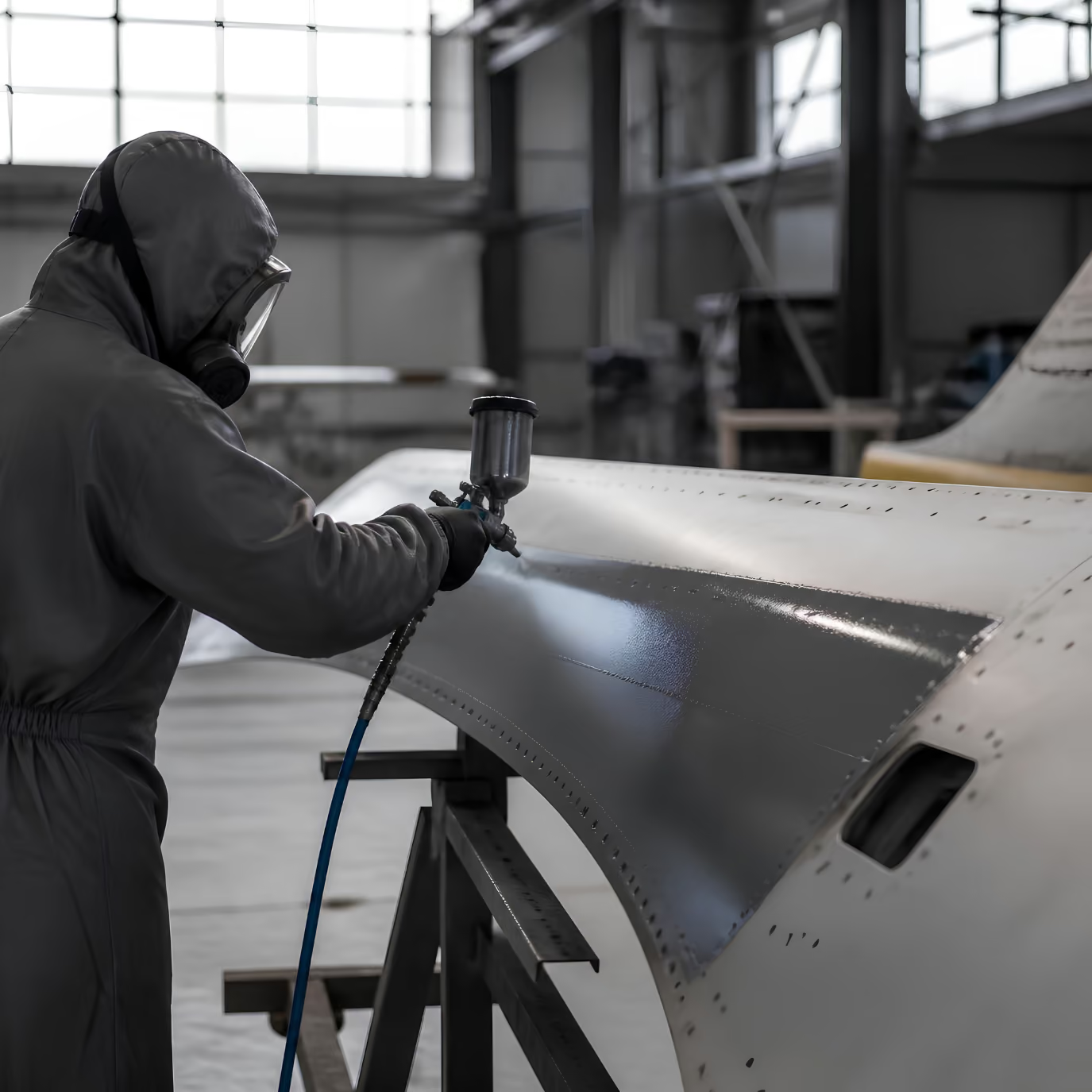
WHY TREAT COMPRESSED AIR
Chromate-free epoxy primers (REACH) are sensitive to micro-condensation: even traces of moisture cause fish-eye and micro-bubbles that trigger delamination during thermal cycling. A panel to redo means hours of hangar downtime and an NCR to manage.
Traces of oil contaminate the 2K topcoat. The result is a surface that fails the cross-cut test: a panel to redo, a documented non-conformance, delayed delivery and a risk to the production certification.
Painting a wing or a fuselage requires stable air delivery for minutes at a time. A drop halfway through a pass leaves a visible demarcation line: sanding, a blending coat, a new primer cycle. Days of delivery delay.
THE EVANS SYSTEM ADVANTAGE
From the MRO shop to the final assembly line (FAL), Evans sizes the air treatment system based on the required flow rate and the painting specifications of the contract.
Site survey, sizing, installation and testing included.
Request information →Maintenance, repair and overhaul. Compact installation on your existing compressor, easy to certify.
Doors, panels and structural parts. Modular system for multiple spray stations working in parallel.
Complete aircraft and large structures. Robotic lines and a centralized system with remote monitoring and compliance reports.

The Evans system can be interconnected with the paint line: real-time monitoring of pressure, temperature and dew point, automatic alerts, and data for the Industry 5.0 tax credit.
FAQ
In aviation, every paint defect is a documented non-conformance: the aircraft cannot be released until it is resolved. AS9100, NADCAP and OEM specifications (Airbus, Leonardo, Boeing) require surfaces free of oil contamination, fish-eye and thickness variations. A panel to redo costs days of hangar downtime and can jeopardize production certifications.
Delamination of chromate-free primer is triggered during thermal cycling when water micro-bubbles, trapped during application, expand. These micro-bubbles form when the compressed air contains condensation. An Evans system removes condensation upstream, ensuring an inclusion-free primer film from the very first cycle.
Yes. Evans systems are compatible with all major aerospace coating cycles: vinyl wash primer, chromate-free epoxy primer (REACH-compliant), and 2K polyurethane topcoat (AkzoNobel Aerodur, Sherwin-Williams Jet-Flex). Treated air improves primer adhesion and ensures the topcoat reaches specification thickness on the first pass.
Yes. Evans sizes the treatment system based on the flow rate and pressure of the existing compressor. Installation takes place downstream of the compressor without modifying the main network. In MRO shops with existing certifications, commissioning can be documented for the AS9100 audit.
For an MRO shop or a component paint hangar, installation and commissioning typically take one working day. For centralized systems on FAL lines, Evans plans the work with the quality manager to minimize production downtime.
Yes. Evans systems introduce no chemicals into the process: they purify and condition compressed air without additives. They are compatible with the chromate-free cycles required by REACH and have no impact on the VOC compliance of the aircraft paint line.


